

How To Choose The Right Dispersing Agent For Paint Formulations
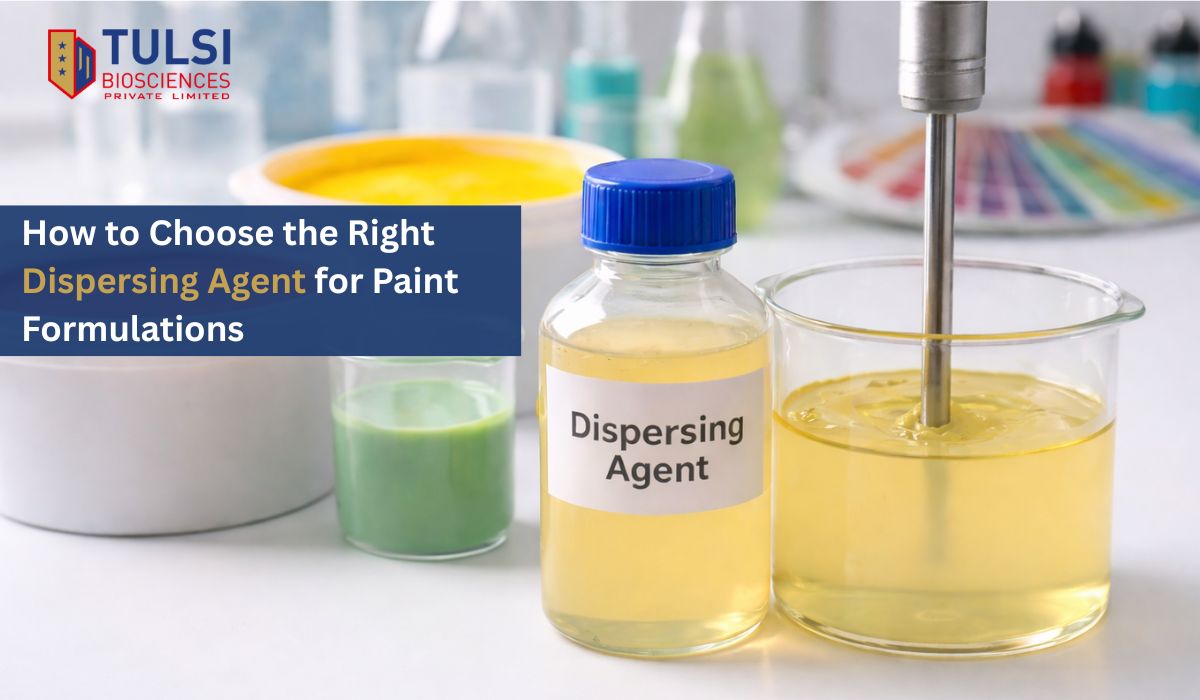
How To Choose The Right Dispersing Agent For Paint Formulations
In modern paint manufacturing, achieving consistent quality, stability, and performance depends heavily on proper pigment dispersion. This is where a dispersing agent plays a critical role. Whether you are producing decorative paints, industrial coatings, or primers, selecting the right dispersing agent can directly impact color strength, gloss, and shelf life.
Poor dispersion often leads to issues like sedimentation, flocculation, and uneven color development. Therefore, understanding how to choose the right dispersing agent is essential for manufacturers aiming to deliver high-performance coatings.
What Is a Dispersing Agent?
A dispersing agent is a chemical additive used to separate and stabilize pigment particles in a liquid medium, typically water in eco-friendly paint systems.
It performs three key functions:
- Wetting: Helps liquid penetrate pigment particles
- Dispersion: Breaks down agglomerates into fine particles
- Stabilization: Prevents particles from re-clumping
In simple terms, dispersing agents ensure that pigments remain evenly distributed throughout the paint, improving consistency and application quality.
Why Choosing the Right Dispersing Agent Matters
Selecting the correct dispersing agent in paint formulations is not just a technical choice—it directly affects product performance and customer satisfaction.
Key impacts include:
- Improved color strength: Better pigment distribution enhances tinting efficiency
- Enhanced stability: Prevents settling and extends shelf life
- Superior finish: Ensures smooth texture and uniform coating
- Optimized production: Reduces grinding time and energy consumption
Using the wrong dispersing agent can lead to poor dispersion, increased costs, and inconsistent product quality.
Types of Dispersing Agents Used in Paint Formulations
Different paint systems require different types of dispersing agents. The most commonly used categories include:
1. Polymeric Dispersing Agents
- Provide strong steric stabilization
- Ideal for high-performance and water-based coatings
- Suitable for both organic and inorganic pigments
2. Anionic Dispersing Agents
- Work through electrostatic repulsion
- Common in cost-effective formulations
- Suitable for inorganic pigments
3. Non-Ionic Dispersing Agents
- Offer compatibility with various systems
- Used where ionic interaction must be minimized
4. Water-Based Dispersing Agents
- Designed for low-VOC and eco-friendly coatings
- Widely used in modern paint formulations
Choosing the right type depends on formulation goals, pigment type, and application requirements.
Key Factors to Consider When Selecting a Dispersing Agent
To choose the right dispersing agent for pigments, manufacturers should evaluate the following factors:
Pigment Type
- Organic pigments: Require stronger stabilization
- Inorganic pigments: Easier to disperse but still need compatibility
Binder/Resin System
- Compatibility with acrylic, PVA, or styrene emulsions is crucial
- Poor compatibility can cause instability
Application Type
- Interior vs exterior paints
- Decorative vs industrial coatings
Dispersion Process
- Grinding equipment and shear force
- Batch vs continuous processing
Dosage Level
- Under-dosing leads to poor dispersion
- Over-dosing can affect film properties and cost
A well-balanced selection ensures optimal performance without unnecessary formulation issues.
Common Problems & How to Avoid Them
Improper use of dispersing agents can lead to several formulation challenges:
Flocculation
- Pigments regroup, reducing color strength
- Solution: Use a compatible dispersant with proper dosage
Settling
- Pigments sink during storage
- Solution: Improve stabilization and rheology control
Poor Color Development
- Uneven dispersion affects shade accuracy
- Solution: Optimize grinding and dispersant selection
Foam Formation
- Some dispersants increase foam
- Solution: Use defoamers alongside dispersants
Understanding these problems helps in selecting the right additive combination.
Role of Dispersing Agents in Water-Based & Low-VOC Paints
As the industry shifts toward sustainability, dispersing agent uses have become more important in water-based systems.
Key benefits include:
- Reduced environmental impact
- Low VOC emissions
- Safer indoor air quality
- Improved compliance with regulations
Water-based dispersing agents are specifically designed to maintain stability and performance in aqueous formulations, making them essential for modern coatings.
Best Practices for Pigment Dispersion in Paint Manufacturing
To maximize the effectiveness of a dispersing agent, manufacturers should follow best practices:
- Add dispersing agent before pigment addition
- Maintain proper mixing sequence
- Use adequate grinding time and energy
- Monitor particle size distribution
- Ensure compatibility with other additives
Proper processing enhances dispersion efficiency and overall paint performance.
Why Choose Tulsi Bio Sciences for Dispersing Agents
Choosing the right supplier is as important as selecting the right product. Tulsi Bio Sciences offers high-quality dispersing agent solutions tailored for paints, coatings, and industrial applications.
Tulsi Bio Sciences offers a range of dispersing agents including:
- Tulsicryl DSP – High-efficiency pigment dispersion
- Tulsicryl CN-40 – Balanced performance and stability
- Tulsicryl CA-40 – Cost-effective solution for water-based paints
These products are engineered to improve color strength, reduce grinding time, and enhance overall coating performance.
Key advantages:
- Consistent product quality
- Expertise in water-based formulations
- Custom solutions for different industries
- Reliable bulk supply
- Technical support for formulation optimization
With a strong focus on innovation and performance, Tulsi Bio Sciences helps manufacturers achieve better dispersion, stability, and final product quality.
Conclusion
Selecting the right dispersing agent is a critical step in developing high-performance paint formulations. From improving pigment dispersion and color strength to enhancing stability and application properties, the right choice can significantly impact the final product.
By considering factors such as pigment type, binder compatibility, and application requirements, manufacturers can optimize their formulations for better efficiency and performance.
Looking to improve your paint formulations?
Contact Tulsi Bio Sciences today for expert guidance and high-performance dispersing agent solutions tailored to your needs.
Latest Posts


Have questions or need product details?

