
Pva Emulsion For Wood Adhesives
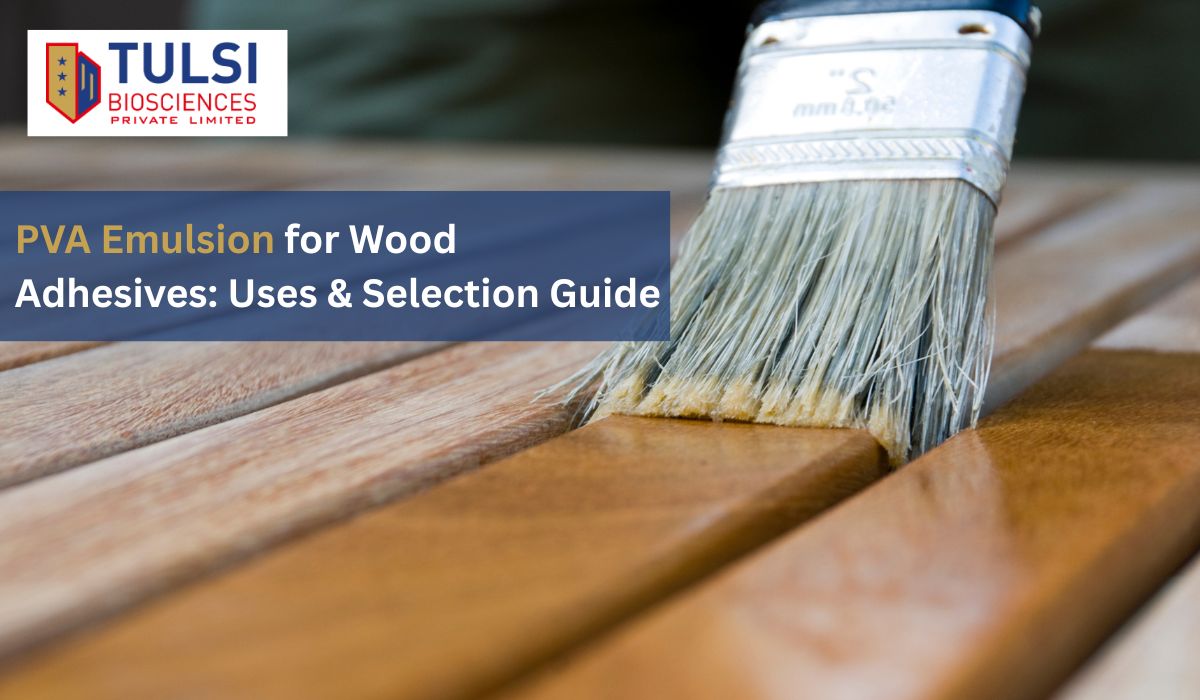
Pva Emulsion For Wood Adhesives
In the wood and furniture industry, the quality of bonding directly impacts product durability and finish. Whether it’s furniture manufacturing, plywood production, or interior applications, choosing the right adhesive is critical. Among various options available, PVA emulsion has become one of the most widely used solutions due to its versatility, ease of use, and cost-effectiveness.
As industries move toward sustainable and efficient manufacturing, water-based adhesives like PVA emulsions are gaining strong preference. This guide explains what PVA emulsion is, its uses in wood adhesives, and how to select the right one for your application.
What is PVA Emulsion?
PVA (Polyvinyl Acetate) emulsion is a water-based adhesive system widely used for bonding porous materials such as wood, paper, and textiles. It is created through a polymerization process where vinyl acetate monomers are converted into a stable emulsion.
One of the key reasons for its popularity is that it is ready to use, non-toxic, and easy to apply. Unlike solvent-based adhesives, PVA emulsions do not release harmful fumes, making them safer for both workers and the environment.
Why PVA Emulsion is Preferred for Wood Adhesives
PVA emulsion is especially suitable for wood because of how it interacts with wood fibers. Wood is a porous material, and PVA penetrates these pores effectively, creating a strong mechanical bond.
Some reasons why it is preferred include:
- Excellent adhesion to wood surfaces
- Smooth film formation for clean finishing
- Easy application using brush, roller, or machine
- Suitable for both small-scale carpentry and large industrial production
This makes it a reliable choice for consistent and long-lasting wood bonding.
Uses of PVA Emulsion in Wood Industry
PVA emulsions are used across a wide range of wood-related applications:
- Furniture Manufacturing – For assembling joints and panels
- Plywood and MDF Bonding – Ensures strong layer adhesion
- Wood Lamination – Used for decorative laminates and veneers
- Carpentry and Joinery – Ideal for doors, windows, and fittings
- Interior Applications – Used in panels, partitions, and décor elements
Its versatility allows manufacturers to use one adhesive system across multiple processes, improving efficiency.
Key Benefits of PVA Emulsion for Wood Bonding
Using PVA emulsion in wood adhesives offers several advantages:
- Strong Bond Strength – Provides durable and reliable adhesion
- Fast Setting Time – Improves production speed
- Water-Based & Eco-Friendly – Low VOC and safer handling
- Cost-Effective – Ideal for bulk industrial use
- Good Spreadability – Ensures uniform coverage and reduced wastage
These benefits make PVA emulsions a preferred choice for manufacturers looking to balance performance and cost.
Understanding Different Types of PVA Emulsions
Not all PVA emulsions are the same. They are designed with different properties to suit specific applications:
- Low Viscosity Emulsions
Easy to flow and spread, suitable for machine applications and lamination - Medium Viscosity Emulsions
Balanced performance for general woodworking and furniture - High Viscosity Emulsions
Thicker consistency, ideal for strong bonding and gap filling - High Solid Content Emulsions
Offer better coverage, improved strength, and efficiency
Understanding these variations helps in selecting the right adhesive for your production needs.
Key Properties to Consider Before Selection
Before choosing a PVA emulsion, consider the following factors:
- Viscosity – Determines flow and application method
- Solid Content – Affects bonding strength and coverage
- Drying Time – Impacts production speed
- Bond Strength – Must match the end-use requirement
- Water Resistance – Important for durability in certain conditions
Matching these properties with your application ensures optimal performance.
How to Choose the Right PVA Emulsion for Wood Applications
Selecting the right PVA emulsion depends on multiple factors:
- Application Type
Furniture, plywood, lamination, or joinery work - Process Method
Manual application or machine coating - Strength Requirement
Light bonding vs heavy-duty structural bonding - Production Scale
Small workshops vs large manufacturing units - Environmental Conditions
Indoor or semi-exposed usage
Testing the adhesive under actual working conditions is always recommended before final selection.
Common Mistakes to Avoid
Choosing the wrong adhesive can lead to poor performance. Some common mistakes include:
- Using incorrect viscosity for the application
- Ignoring proper surface preparation
- Not testing adhesive performance beforehand
- Selecting one adhesive for all types of wood applications
Avoiding these mistakes helps ensure consistent quality and reduces rework.
Why Choose Tulsi Bio Sciences for PVA Emulsions
Tulsi Bio Sciences is a trusted name among PVA emulsion manufacturers in India, offering high-quality, water-based adhesive solutions tailored for wood applications.
Key advantages include:
- Wide range of PVA emulsions for different wood applications
- Consistent product quality and performance
- Technical expertise and application support
- Focus on eco-friendly and sustainable solutions
Looking for the right PVA emulsion for your wood application? Contact Tulsi Bio Sciences today for expert guidance and customized solutions.
Conclusion
PVA emulsion plays a vital role in modern wood adhesive applications, offering a balance of strength, ease of use, and cost efficiency. From furniture manufacturing to plywood bonding, its versatility makes it an essential component in the wood industry.
By understanding its properties, uses, and selection criteria, businesses can improve product quality and operational efficiency. Choosing the right manufacturer further ensures reliable performance and long-term success.
FAQs
What is PVA emulsion used for?
PVA emulsion is used for bonding wood, paper, and porous materials, especially in furniture and packaging industries.
Is PVA emulsion good for wood?
Yes, it provides strong adhesion to wood due to its ability to penetrate and bond with wood fibers.
What is the difference between low and high viscosity PVA emulsion?
Low viscosity is suitable for easy application and machine use, while high viscosity offers stronger bonding and gap filling.
How do you choose the right PVA emulsion?
It depends on application type, bonding strength, viscosity, and production process requirements.
Latest Posts

Have questions or need product details?

