Emulsion Suppliers In The Middle East Exporting From India To The Gcc
The demand for high-quality polymer emulsions is growing across the Middle East, particularly in paints, coatings, adhesives, and construction chemicals. Manufacturers in the United Arab Emirates (UAE), Saudi Arabia, Qatar, Oman, Kuwait, and Bahrain require reliable raw materials to develop water-based products for different industrial and construction applications.
For GCC businesses, sourcing emulsions from India can provide access to a range of polymer technologies and bulk supply options. However, selecting the right emulsion supplier involves more than comparing prices. Product specifications, consistency, technical support, export documentation, and delivery arrangements all matter.
Tulsi Bio Sciences Pvt. Ltd., an India-based manufacturer and exporter of specialty emulsions, serves industrial markets with polymer emulsion solutions for selected applications.
What Are Industrial Emulsions?
Industrial emulsions are polymer-based dispersions in which polymer particles are distributed in water. They are commonly used as binders in water-based paints, coatings, adhesives, and construction chemical formulations.
Depending on their chemistry and formulation, emulsions can contribute to film formation, adhesion, flexibility, water resistance, and surface protection. The performance of the final product depends on the polymer type, formulation design, substrate, and application conditions.
For manufacturers in the GCC, choosing an appropriate emulsion is important for achieving the required coating or adhesive performance.
Types of Emulsions Used in Middle Eastern Industries
Different industries require different polymer emulsion technologies. Common types include:
- Pure acrylic emulsion: Used in selected exterior and interior paints, protective coatings, and applications where weathering and durability are important considerations.
- Styrene acrylic emulsion: Commonly used as a binder in water-based architectural paints, masonry coatings, and selected construction formulations.
- PVA emulsion: Used in adhesives, paper applications, woodworking, and other suitable bonding formulations.
- Polymer emulsions for construction chemicals: Used in compatible cementitious waterproofing systems, bonding agents, and protective coatings.
The right choice depends on the required solids content, viscosity, pH, minimum film formation temperature (MFFT), compatibility, and final application.
Applications of Emulsions in Paints, Coatings, Adhesives, and Construction Chemicals
Polymer emulsions support several manufacturing industries throughout the Middle East.
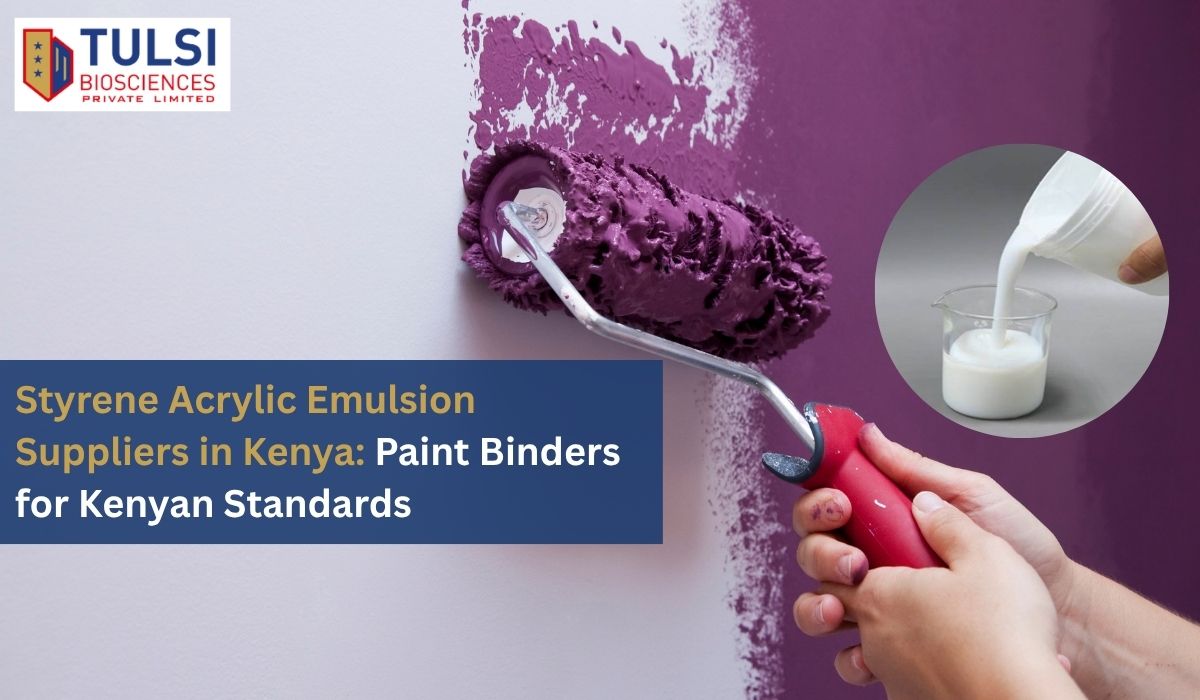
Paints and coatings: Acrylic and styrene acrylic emulsions are used as binders in water-based paints. They help bind pigments and fillers while contributing to film formation and adhesion.
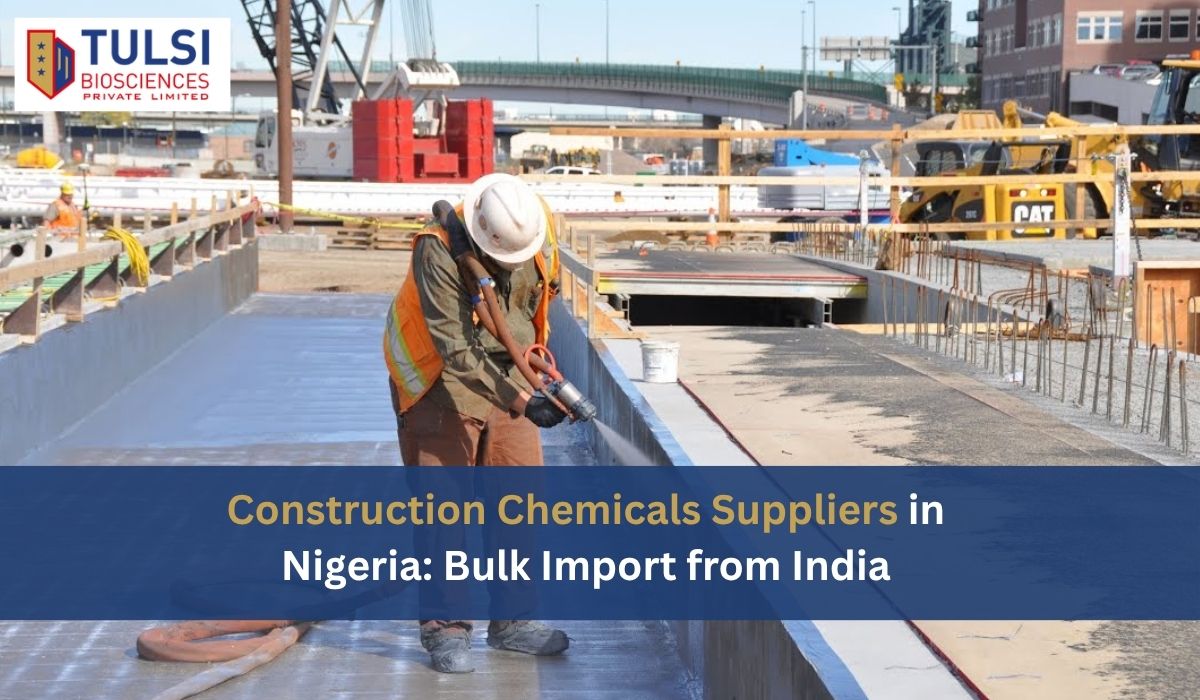
Construction chemicals: Suitable polymer emulsions are incorporated into certain waterproofing coatings, cementitious systems, and bonding agents. Product selection should consider substrate compatibility and the project's exposure conditions.
Adhesives: PVA and other suitable polymer emulsions are used in selected woodworking, packaging, paper, and general adhesive formulations.
Industrial coatings: Depending on the polymer chemistry, emulsions can be used in specialty coating formulations requiring particular film properties and application characteristics.
Why Is Demand for Water-Based Emulsions Growing in the GCC?
The GCC construction and manufacturing markets create demand for raw materials used in paints, protective coatings, adhesives, and building products.
Water-based emulsions are relevant to manufacturers looking for formulations that use water as the dispersion medium. Their suitability still depends on the application, performance specifications, and applicable environmental and product regulations.
Climate conditions also influence product selection. High temperatures, strong sunlight, humidity, and coastal exposure can affect coating performance. Manufacturers should evaluate the complete formulation under conditions representative of the intended application rather than relying on polymer type alone.
Key Properties to Consider When Selecting an Emulsion
Before purchasing industrial emulsions, GCC manufacturers should review these important parameters:
|
Property |
Why It Matters |
|
Solids content |
Indicates the proportion of non-volatile material in the emulsion |
|
Viscosity |
Influences handling, pumping, mixing, and formulation behaviour |
|
pH |
Helps assess compatibility and formulation stability |
|
MFFT |
Indicates the minimum temperature required for suitable film formation |
|
Adhesion |
Important for bonding to the intended substrate |
|
Film formation |
Influences the development of a continuous polymer film |
|
Water resistance |
Relevant to coatings and construction applications exposed to moisture |
Always request the latest Technical Data Sheet (TDS) and Safety Data Sheet (SDS). Conduct formulation trials before approving an emulsion for commercial production.
How to Choose Reliable Emulsion Suppliers in the Middle East
When comparing emulsion suppliers in the Middle East, buyers should evaluate:
- Product range: Check whether the supplier offers the polymer chemistry required for your application.
- Technical documentation: Review TDS, SDS, specifications, and available test reports.
- Quality consistency: Ask about batch identification and quality-control procedures.
- Manufacturing capacity: Confirm the supplier can support your expected order quantities and repeat requirements.
- Technical assistance: Choose a supplier that can respond to formulation and product-related questions.
- Export experience: Discuss packaging, shipment schedules, documentation, and delivery terms.
A reliable supplier should provide clear product information and realistic delivery commitments rather than making unsupported performance claims.
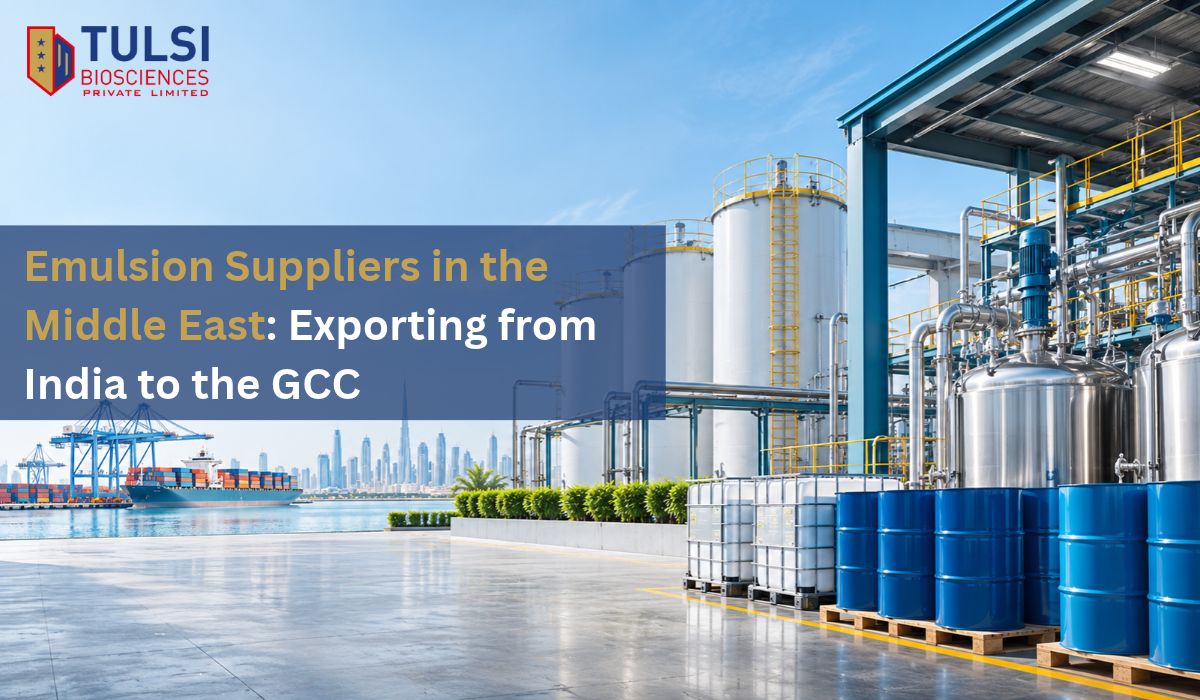
Exporting Industrial Emulsions from India to GCC Countries
India is an important sourcing destination for industrial chemicals and polymer emulsions. GCC buyers can approach Indian manufacturers directly for product specifications, samples, bulk quotations, and export arrangements.
The typical export process includes:
- Identifying the required emulsion grade and application.
- Sharing quantity, packaging, and delivery requirements.
- Requesting a technical data sheet and commercial quotation.
- Confirming product suitability and sample testing.
- Agreeing on payment terms, Incoterms, and shipment schedules.
- Preparing export and destination-country import documentation.
Import requirements differ between the UAE, Saudi Arabia, Qatar, Oman, Kuwait, and Bahrain. Buyers should verify applicable customs classification, product restrictions, conformity requirements, and chemical documentation with their local clearing agent or relevant authorities before shipment.
Bulk Emulsion Purchasing: Pricing, Packaging, and Shipping Considerations
The cost of importing emulsions depends on polymer type, solids content, grade, order quantity, packaging, freight, insurance, and delivery terms.
Buyers should compare quotations using the same product specifications and Incoterms. They should also confirm minimum order quantities, shelf life, recommended storage conditions, and packaging compatibility.
Because many water-based emulsions are sensitive to extreme temperatures and storage conditions, suitable handling during transportation is important. Confirm the manufacturer's storage and transit recommendations before dispatch.
Why Consider Tulsi Bio Sciences as Your Emulsion Supplier?
Tulsi Bio Sciences Pvt. Ltd. is an India-based manufacturer and exporter of specialty polymer emulsions for industrial applications.
Its product portfolio includes emulsions for paints and coatings, adhesives, and selected construction chemical formulations. Buyers across the GCC can contact the company to discuss available product grades, technical specifications, bulk requirements, and export possibilities.
Rather than selecting a product based only on its general category, manufacturers should share their intended application and formulation requirements so the appropriate available grade can be evaluated.
Contact Tulsi Bio Sciences:
- Website: www.tulsibiosciences.com
- Email: info@tulsibiosciences.com
- Purchase Inquiries / WhatsApp: +91 70694 79522
Contact the team to discuss bulk emulsion requirements, product specifications, and export enquiries for GCC markets.
How to Request a Bulk Emulsion Export Quotation
For an accurate quotation, GCC buyers should share:
- Required emulsion type and application.
- Estimated order quantity.
- Required solids content and other technical specifications.
- Preferred packaging.
- Destination country and delivery port.
- Expected order frequency and delivery schedule.
Providing these details helps the supplier assess product suitability and prepare a more relevant commercial offer.
Conclusion
Finding reliable emulsion suppliers in the Middle East requires careful evaluation of product specifications, manufacturing consistency, technical support, and export capabilities. Importing polymer emulsions from India can be a practical sourcing option for GCC paint manufacturers, coating formulators, adhesive producers, and construction chemical businesses.
Tulsi Bio Sciences offers a range of specialty emulsions for industrial applications. GCC buyers can contact the company to discuss suitable grades, bulk supply requirements, and export quotations.
Frequently Asked Questions (FAQ)
1. What are industrial emulsions used for?
Industrial emulsions are used as binders in water-based paints, coatings, adhesives, and selected construction chemical formulations.
2. Which types of emulsions are commonly used in the GCC?
Pure acrylic, styrene acrylic, PVA, and other specialty polymer emulsions are used depending on the industry and formulation requirements.
3. Can GCC businesses import emulsions from India?
Yes. GCC businesses can source emulsions from Indian manufacturers, subject to the applicable import, customs, and product-specific regulatory requirements in the destination country.
4. What documents should I request from an emulsion supplier?
Buyers should request a current TDS, SDS, product specifications, commercial invoice, packing list, and applicable shipping or origin documents.
5. How do I select the right emulsion for water-based paints?
Consider solids content, viscosity, pH, MFFT, film formation, adhesion, compatibility, and the performance requirements of the finished paint.
6. Does Tulsi Bio Sciences export emulsions to GCC markets?
Contact Tulsi Bio Sciences directly to confirm current export availability, product grades, order quantities, and delivery arrangements for your destination country.
7. How can I get a bulk emulsion quotation from India?
Share your required emulsion type, application, quantity, technical specifications, packaging preference, and destination port with the manufacturer to request a quotation.