

Rheology Modifier Suppliers In Uae Choosing The Right Partner
Rheology Modifier Suppliers In Uae Choosing The Right Partner
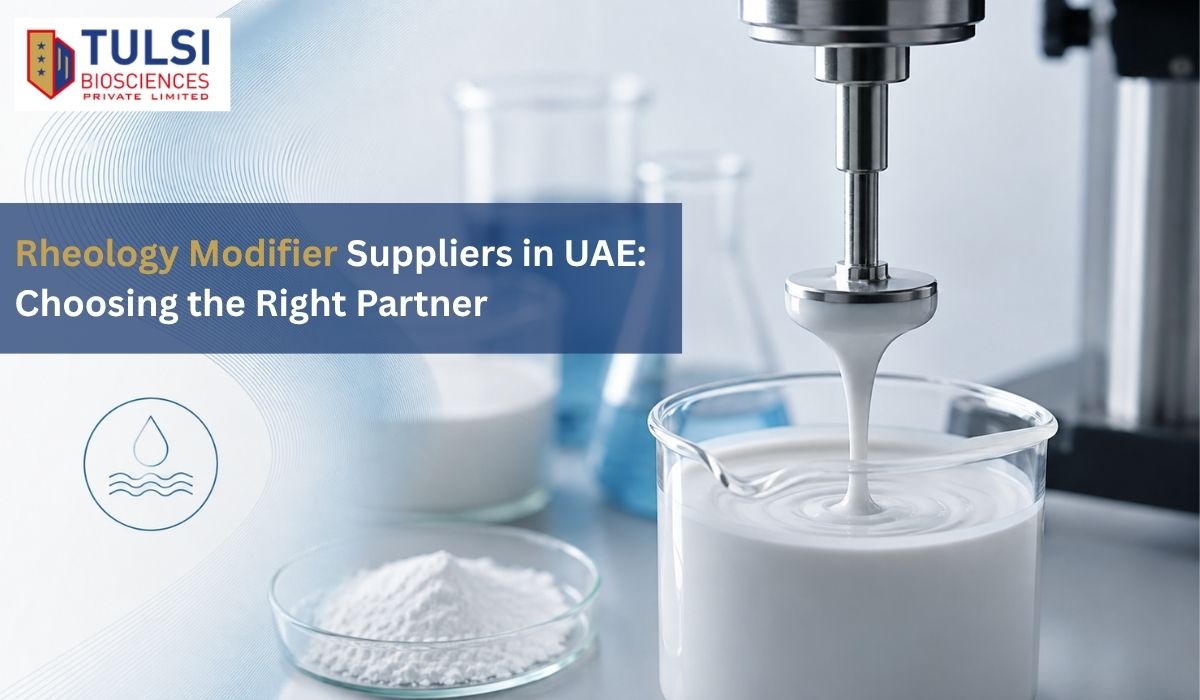
Rheology plays an important role in the performance, application, and stability of modern paints and coatings. For manufacturers in the UAE, selecting the right rheology modifier supplier is not simply about purchasing a thickener. The right additive must work with the formulation, provide the required viscosity and flow behavior, and support consistent product quality.
This guide explains what rheology is, what rheology modifiers do, how they are used in waterborne paints, and what to consider when choosing a rheology modifier supplier in the UAE. It also covers important commercial considerations such as rheology modifier price and sourcing options in Dubai and other UAE markets.
What Is a Rheology Modifier?
A rheology modifier is an additive used to control the flow and viscosity behavior of a formulation. In paints and coatings, it helps manufacturers achieve the desired consistency during manufacturing, storage, application, and drying.
Unlike a simple thickener that primarily increases viscosity, a rheology modifier can be selected to influence several formulation characteristics, including:
- Viscosity
- Flow and leveling
- Sag resistance
- Anti-settling behavior
- Application feel
- Storage stability
- Brush, roller, or spray application
The correct rheology modifier depends on the formulation chemistry, solids content, pH, application method, and required performance.
Understanding Rheology Viscosity in Paints and Coatings
Rheology describes how a material flows and deforms when force is applied. In paint manufacturing, understanding rheology viscosity is particularly important because paint does not behave like a simple liquid.
A coating may need to remain stable in a container but flow easily when applied with a brush, roller, or spray equipment. After application, it should resist excessive sag while still providing good leveling.
This is why rheological additives are carefully selected rather than simply adding more thickener to increase viscosity.
For UAE paint and coating manufacturers, the objective is generally to achieve a balanced formulation that performs consistently during production, transportation, storage, and application.
Rheology Modifiers for Waterborne Paints
Waterborne paints rely on water as the primary continuous phase, and their rheological behavior needs to be carefully controlled. Rheology modifiers for waterborne paints can help adjust viscosity and flow properties while supporting application performance.
The selection of an additive should consider the complete formulation rather than viscosity alone. Factors such as binder type, pigment dispersion, pH, surfactants, solvents or co-solvents, and other additives can affect the final rheological profile.
A suitable water-based paint thickener may help manufacturers achieve:
- Better application consistency
- Improved resistance to sagging
- Controlled flow and leveling
- Better pigment and filler suspension
- Consistent viscosity during storage
- Improved handling during application
For this reason, technical evaluation and formulation testing are important before commercial-scale adoption.
Applications of Rheology Modifiers in Paints and Coatings
Rheology modifiers have applications across different water-based coating systems. Their use depends on the performance requirements of each formulation.
Common applications include:
Interior and exterior paints: Rheology control can support smooth application and appropriate viscosity.
Decorative coatings: The right rheological profile can influence brush and roller application as well as leveling.
Industrial coatings: Manufacturers may require specific flow and viscosity characteristics for different application equipment.
Waterborne coatings: Rheological additives help formulate products with controlled viscosity and application behavior.
Construction coatings: Appropriate rheology can be important for coating consistency and resistance to sagging on vertical surfaces.
The exact additive and dosage should always be established through formulation trials and technical evaluation.
How to Choose a Rheology Modifier Supplier in UAE
Choosing a rheology modifier supplier in UAE requires more than comparing product prices. Paint manufacturers should evaluate the supplier's technical capabilities, product consistency, documentation, and ability to support formulation requirements.
Consider these factors:
- Product compatibility: The additive should be suitable for the intended waterborne formulation.
- Technical documentation: Request relevant TDS and SDS documentation and review recommended application information.
- Batch consistency: Consistent raw material quality is important for repeatable paint production.
- Technical support: A supplier should be able to provide useful formulation and product information.
- Supply capability: Reliable availability and suitable packaging can be important for regular production.
- Commercial terms: Evaluate pricing, minimum order quantities, lead times, and logistics together rather than looking at price alone.
A supplier that combines technical information with dependable supply can be a more useful long-term partner for UAE manufacturers.
Rheology Modifier Price: What Factors Affect Cost?
The rheology modifier price can vary depending on the chemistry, grade, performance requirements, order quantity, packaging, and supply route.
Therefore, comparing suppliers only on price per kilogram may not provide a complete picture. A lower-cost additive may require a different dosage or may not deliver the required rheological profile.
Manufacturers should consider cost-in-use, which includes dosage, formulation performance, consistency, and overall production requirements.
For buyers looking for a thickener supplier in Dubai, it is also useful to compare technical specifications, supply reliability, documentation, and support alongside commercial quotations.
Why Dubai and the UAE Need Reliable Thickener Suppliers
Dubai is an important commercial and industrial hub connecting manufacturers, distributors, and international suppliers across the Middle East and wider region. Paint and coating manufacturers need dependable access to raw materials to maintain production schedules and product consistency.
A reliable supplier can help reduce uncertainty around material availability, documentation, product specifications, and repeat purchasing.
For UAE manufacturers, sourcing rheological additives from an experienced manufacturer or export-oriented supplier can therefore be an important part of maintaining a stable raw-material supply chain.
Why Choose Tulsi Bio Sciences for Rheology Modifiers?
Tulsi Bio Sciences can be positioned as a supplier option for manufacturers looking for rheology modifiers and water-based formulation additives. For B2B buyers, the focus should be on matching the additive to the formulation rather than selecting a product based only on a general application description.
Before purchasing, manufacturers should discuss their formulation requirements, intended application, viscosity target, and processing conditions with the supplier. Technical documents such as TDS and SDS should also be reviewed before commercial use.
See All Products Here - Rheology Modifiers
Contact Details -
Quote - Get full details!
Phone No. - +91 990-422-2944
Manufacturing Hub - Survey No. 409/P1, Village Karvad, Tal. Vapi, Valsad, Gujarat, 396195, INDIA
Where Does Tulsi Bio Sciences Supply Rheology Modifiers in the UAE?
For UAE-focused sourcing, manufacturers and distributors can evaluate supply opportunities across key commercial markets including Dubai, Abu Dhabi, Sharjah, Ajman, Umm Al Quwain, Ras Alkhaimah, and Fujairah subject to current supply arrangements and order requirements.
When contacting a supplier, buyers should clearly specify the required application, estimated quantity, formulation type, and technical requirements. This makes it easier to identify an appropriate rheology modifier and obtain a relevant quotation.
Conclusion
Choosing the right rheology modifier supplier in UAE is an important decision for paint and coating manufacturers. Rheology modifiers do more than increase viscosity—they can influence flow, leveling, sag resistance, suspension, application behavior, and formulation stability.
Whether you are sourcing a HASE thickener, HEUR thickener, water-based paint thickener, or another rheological additive, evaluate product compatibility, technical documentation, consistency, technical support, supply reliability, and cost-in-use.
A supplier that understands both the technical and commercial requirements of your formulation can provide greater value than a supplier competing on price alone.
Frequently Asked Questions (FAQ)
What is a rheology modifier?
A rheology modifier is an additive used to control viscosity, flow, and other rheological properties of formulations such as water-based paints and coatings.
What is rheology used for in paint?
Rheology is used to understand and control how paint flows, spreads, levels, and resists sagging during application and storage.
What are rheology modifiers used for?
They can be used to control viscosity, improve application properties, support pigment and filler suspension, and achieve the desired flow behavior.
How do I choose a rheology modifier supplier in the UAE?
Compare technical compatibility, TDS/SDS documentation, product consistency, technical support, supply reliability, lead time, and cost-in-use—not just the quoted price.
What affects rheology modifier price?
Price can depend on additive chemistry, grade, performance, dosage, order volume, packaging, and logistics.
Are rheology modifiers used in waterborne paints?
Yes. Rheology modifiers are commonly considered when formulating waterborne paints and coatings where controlled viscosity and flow behavior are required.
Latest Posts


Have questions or need product details?

