Key Properties Of Pva Emulsion Homopolymer In Paints Coatings
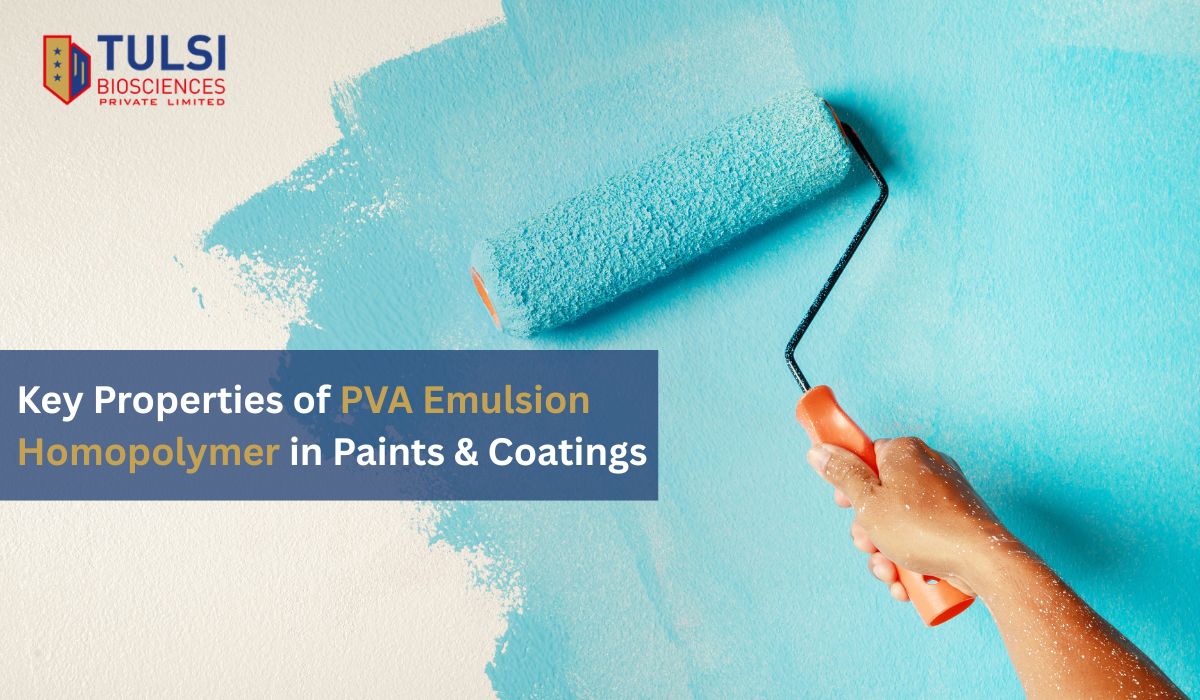
Key Properties Of Pva Emulsion Homopolymer In Paints Coatings
In the paint and coating industry, selecting the right binder is critical for performance, durability, and cost-efficiency. One of the most widely used binders in interior coatings is PVA emulsion homopolymer. Known for its excellent film formation and adhesion properties, this water-based solution plays a major role in modern decorative paints.
As demand grows for eco-friendly and economical coating systems, homopolymer-based emulsions continue to be a preferred choice for interior wall paints, primers, and distempers.
What Is PVA Emulsion Homopolymer?
A homopolymer is a polymer made from a single type of monomer. In the case of PVA emulsion, the monomer used is vinyl acetate, which polymerizes to form Polyvinyl Acetate (PVA).
PVA emulsion is a water-based dispersion of this polymer. Because it is formed from only one monomer, it is classified as a homopolymer system, unlike copolymers that combine multiple monomers for modified performance.
In paint formulations, PVA emulsion acts as a binder that holds pigments and fillers together while forming a continuous film after drying.
Key Properties of PVA Emulsion Homopolymer
Understanding the key properties of PVA emulsion helps paint manufacturers optimize performance and application results. Let’s explore the major characteristics that make this material valuable in coatings.
Film-Forming Properties
One of the most important features of PVA emulsion paint systems is excellent film formation.
When applied to a surface, the water evaporates, allowing polymer particles to coalesce and form a smooth, continuous film. This results in:
- Uniform surface coverage
- Smooth finish
- Good opacity
- Improved aesthetic appeal
This film-forming capability makes PVA emulsion ideal for interior decorative paints and primers where appearance matters.
Adhesion Strength
Adhesion is crucial in determining how well paint sticks to surfaces. PVA emulsion homopolymer offers strong adhesion to:
- Plastered walls
- Concrete surfaces
- Gypsum boards
- Wood substrates
Its binding nature ensures pigments and fillers remain securely attached to the surface, reducing issues like flaking or peeling under normal interior conditions.
For interior coatings where extreme weather resistance is not required, PVA homopolymer delivers dependable bonding performance.
Water-Based & Eco-Friendly Nature
Modern construction increasingly demands sustainable materials. One of the key advantages of PVA emulsion uses in coatings is its water-based formulation.
Benefits include:
- Low VOC (Volatile Organic Compounds) content
- Reduced odor
- Safer indoor air quality
- Easier cleaning with water
- Lower environmental impact
Because of these features, PVA emulsion paint is commonly used in residential and commercial interior spaces where safety and environmental compliance are important.
Viscosity & Rheology Control
Paint application depends heavily on flow and leveling characteristics. PVA emulsion contributes to balanced viscosity and rheology, ensuring:
- Smooth brush and roller application
- Proper leveling without sagging
- Controlled thickness
- Reduced dripping
Good rheological properties help maintain workability during manufacturing and application, making it easier for contractors and applicators to achieve consistent results.
Cost-Effectiveness in Interior Paints
One of the main reasons why PVA emulsion remains popular in the paint industry is affordability. Compared to advanced acrylic systems, homopolymer PVA offers:
- Lower raw material costs
- Economical formulation options
- Suitable performance for interior applications
This makes it ideal for:
- Distempers
- Interior wall primers
- Budget-friendly decorative paints
For large-scale housing projects and cost-sensitive markets, PVA homopolymer-based paints provide reliable performance at competitive pricing.
Compatibility with Pigments & Additives
A binder must interact effectively with pigments, fillers, and additives. PVA emulsion homopolymer demonstrates good compatibility with:
- Titanium dioxide
- Calcium carbonate
- Color pigments
- Thickeners and dispersing agents
This compatibility ensures stable formulations with minimal settling or flocculation issues when properly formulated.
Additionally, its binding capacity supports uniform pigment dispersion, which enhances color consistency and opacity.
Performance Considerations in Paints & Coatings
While PVA homopolymer offers many advantages, it is primarily recommended for interior use. Compared to acrylic copolymers, it may have:
- Moderate water resistance
- Limited exterior durability
- Lower UV resistance
Therefore, it is best suited for interior walls and ceilings rather than exterior coatings exposed to harsh weather.
Understanding these performance parameters helps manufacturers choose the right binder system based on project requirements.
Why Choose Tulsi Bio Sciences for PVA Emulsion Solutions
When selecting a supplier for homopolymer-based emulsions, quality consistency and technical support are essential.
Tulsi Bio Sciences specializes in water-based emulsion technologies designed for paints, adhesives, and industrial coatings. With a focus on:
- Consistent product quality
- Controlled manufacturing processes
- Reliable bulk supply
- Technical formulation support
Tulsi Bio Sciences helps paint manufacturers develop stable, high-performance PVA emulsion paint systems tailored to their needs.
Their expertise in polymer chemistry ensures that every batch delivers dependable film formation, adhesion, and application performance.
Conclusion
PVA emulsion homopolymer remains a foundational binder in interior paint formulations. Its strong film-forming ability, good adhesion strength, eco-friendly water-based nature, and cost-effectiveness make it an ideal choice for distempers, primers, and decorative coatings.
While it may not match the durability of advanced copolymer systems for exterior use, it continues to offer reliable performance where it matters most — inside buildings.
For paint manufacturers looking for consistent quality and dependable homopolymer solutions, Tulsi Bio Sciences provides trusted water-based emulsion systems designed to meet modern industry demands.